Love, betrayal and the longing for forgiveness shape one of the most moving works of Romantic ballet. Giselle, originally titled Giselle, ou les Wilis, premiered at the Paris Opera on June 28, 1841 and stands as a pinnacle of the era in which dance became the embodiment of the supernatural.
At its centre is a young peasant girl who loves to dance and falls in love with the nobleman Albrecht, unaware that he is concealing his true identity. When Giselle learns the truth and discovers that Albrecht is already promised to another, her world collapses. ...
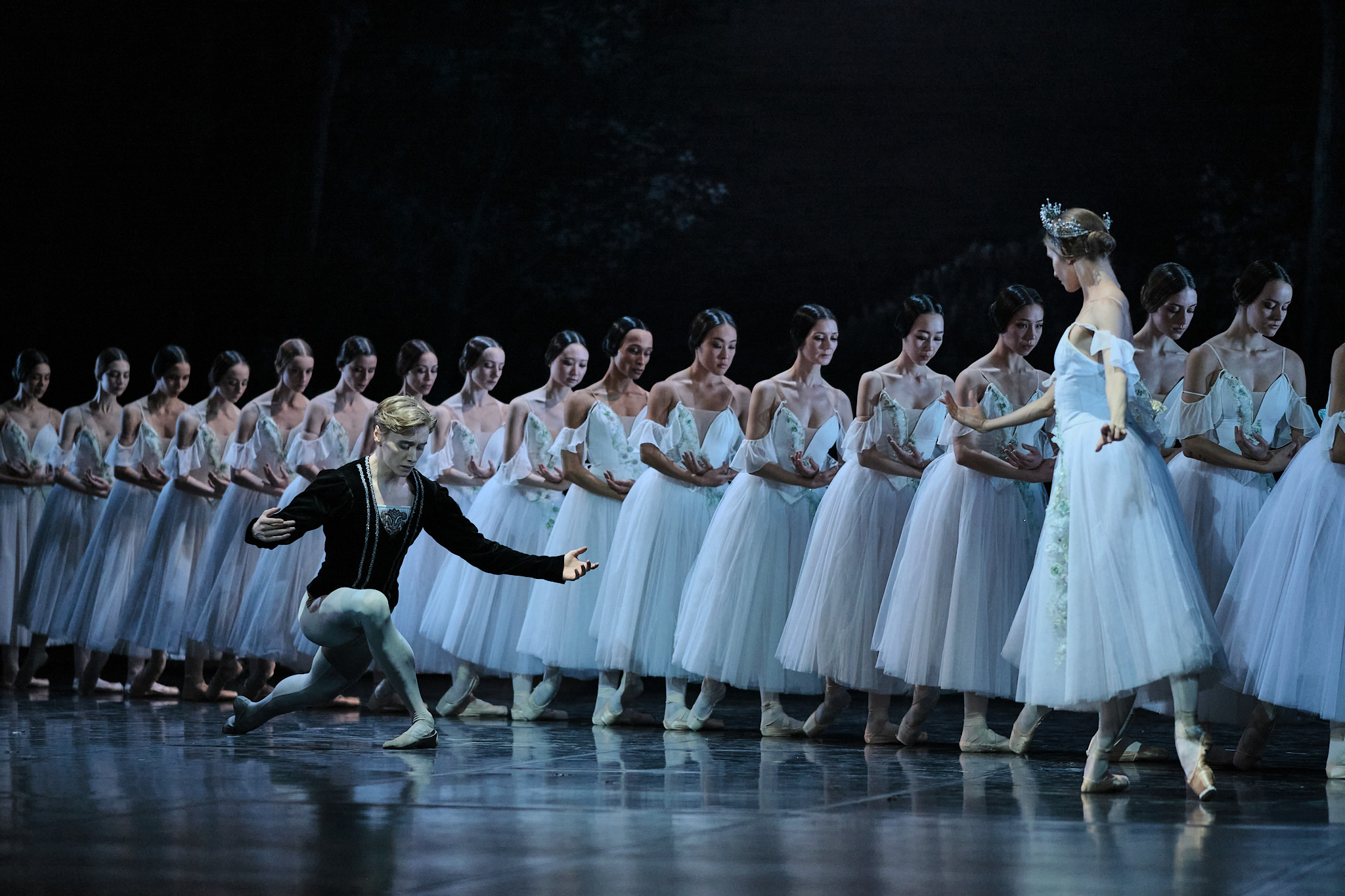
Love, betrayal and the longing for forgiveness shape one of the most moving works of Romantic ballet. Giselle, originally titled Giselle, ou les Wilis, premiered at the Paris Opera on June 28, 1841 and stands as a pinnacle of the era in which dance became the embodiment of the supernatural.
At its centre is a young peasant girl who loves to dance and falls in love with the nobleman Albrecht, unaware that he is concealing his true identity. When Giselle learns the truth and discovers that Albrecht is already promised to another, her world collapses. She loses her sanity and dies of a broken heart. Yet her story does not end with her death.
As one of the Wilis, ghostly brides who died before their weddings, she joins a nocturnal sisterhood that compels men to dance themselves to death. In the second act, the «white» realm of Romantic ballet, Giselle meets Albrecht once more. Her movements become a language of compassion, dissolving the boundary between life and death.
Giselle epitomises Romantic ballet and marks a turning point in dance history. The idea of the ‹floating body› defined the ideal of pointe work and transformed the ballerina into a symbol of the unattainable.
Patrice Bart’s production, based on the original choreography by Jean Coralli and Jules Perrot, continues this tradition. Since its premiere in 2000 at the Staatsoper Unter den Linden, Patrice Bart’s Giselle has continued to captivate audiences with its blend of classical beauty and timeless intensity.
In order for our website to function optimally, we use cookies for some of our applications. This includes i.a. the embedded social media, but also a tracking tool that provides us with information about the ergonomics of our website and user behavior. If you click on "Accept all cookies", you agree to the use of technically necessary cookies and those to optimize our website. See "Cookie Settings" for more information.
Control settings
Please select your preferences. You can change these at any time.
In order for our website to function optimally, we use cookies for some of our applications. These cannot be deactivated, otherwise you will not be able to use all applications.
In order to make our website as user-friendly as possible, we have i.a. social media embedded on our website. This allows you to share content with your loved ones on the appropriate network with just a few clicks. We also use anonymous tracking technology, which gives us information about e.g. the user behavior, but also the effectiveness and ergonomics of our website. For this purpose, we also use services that may be based outside the European Union (especially in the USA), where the level of data protection may be lower than in Germany.