|
Gyula Orendt
Theatre
Gyula Orendt
Theatre
About me
Der 1985 geborene ungarisch-rumänische Bariton Gyula Orendt studierte Gesang an der Transylvania Music University in Brasov (Kronstadt) in Rumänien und beendet derzeit seine Studien an der Franz-Liszt-Musikakademie in Budapest, wo er darüber hinaus als Gesangslehrer ausgebildet wird. Neben 2. Preisen im Rahmen zweier Wettbewerbe in Rumänien und Deutschland gewann er beim Francisco-Viñas-Wettbewerb in Barcelona d...
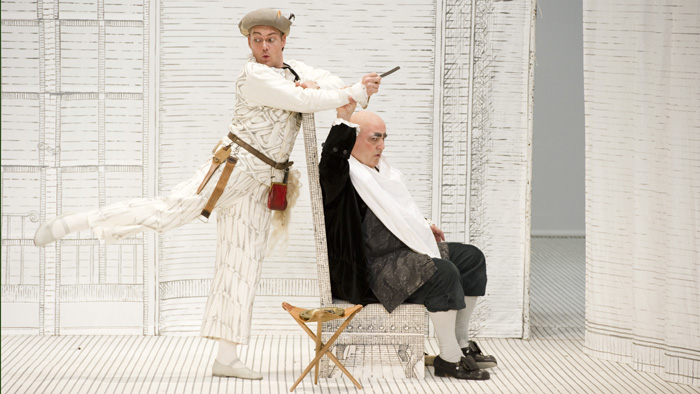
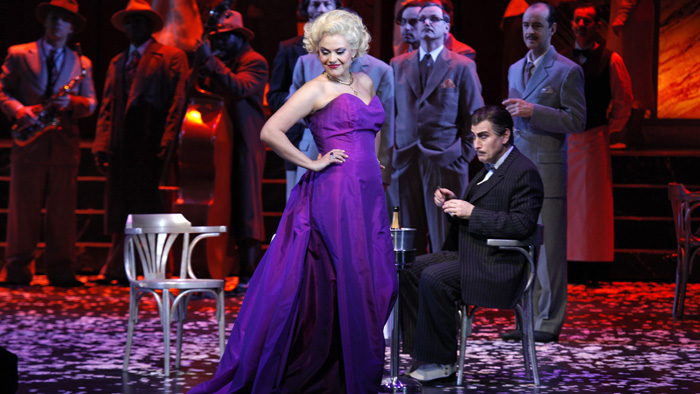
Der 1985 geborene ungarisch-rumänische Bariton Gyula Orendt studierte Gesang an der Transylvania Music University in Brasov (Kronstadt) in Rumänien und beendet derzeit seine Studien an der Franz-Liszt-Musikakademie in Budapest, wo er darüber hinaus als Gesangslehrer ausgebildet wird. Neben 2. Preisen im Rahmen zweier Wettbewerbe in Rumänien und Deutschland gewann er beim Francisco-Viñas-Wettbewerb in Barcelona den Mozartpreis sowie den Preis im Bereich Oratorium/Lied. An der Volksoper Wien war er in den Rollen des Marullo in »Rigoletto«, als Vicomte Cascada in »Die lustige Witwe« und als Anton Schnappauf in Wilhelm Kienzls »Der Evangelimann« zu hören. Zuvor war er bereits an der Volksoper Wien als Moralès und Le Dancaïre in »Carmen« sowie als Jäger in »Rusalka« zu erleben. In den Spielzeiten 2011/12 und 2012/13 war Gyula Orendt Mitglied des Internationalen Opernstudios der Staatsoper Unter den Linden Berlin und Stipendiat der Liz Mohn Kultur- und Musikstiftung. Seit der Spielzeit 2013/14 ist er Mitglied im Ensemble der Staatsoper im Schiller Theater Berlin, wo er unter anderem in der Rolle des Papageno in »Die Zauberflöte«, des Figaro in »Il barbiere di Siviglia«, des Schaunard in »La Bohème« und des Harlekin in »Ariadne auf Naxos« debütierte. Des Weiteren war er in den Produktionen von René Jacobs an der Staatsoper im Schiller Theater Berlin zu sehen: als Tempo und als Consiglio in Cavalieris »Rappresentatione di Anima et di Corpo« sowie als Carolus in Telemanns »Emma und Eginhard«.
Gyula Orendt war in weiteren Hauptrollen an anderen renommierten Opernhäusern zu sehen, u. a. als Guglielmo und als Orfeo an der Opéra National de Lorraine in Nancy, als Heger in Dvořáks »Rusalka« im Royal Opera House Covent Garden London und als Orfeo (im Roundhouse), als Nardo in »La finta giardiniera« in Glyndebourne, als Guglielmo an der Bayerischen Staatsoper und als Conte in »Le nozze di Figaro« an der Ungarische Staatsoper in Budapest.
Zudem übt Gyula Orendt eine rege Konzert-, Lied- und Oratorientätigkeit mit Werken von Bach, Gounod, Händel, Schumann, Brahms und Mahler sowie von ungarischen Komponisten wie Zoltán Kodály, János Decsényi und Kósa György aus.
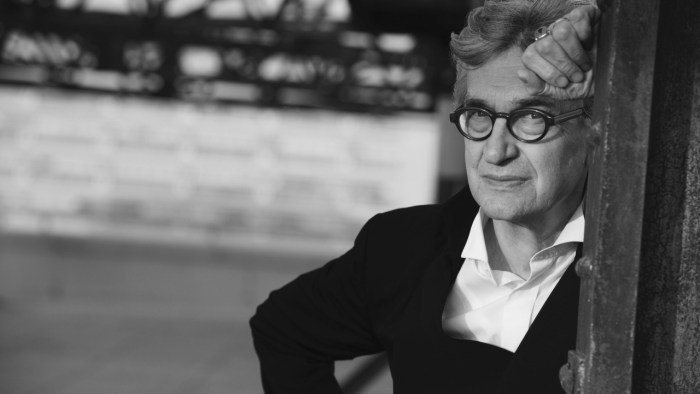
Foto: Gregor Hohenberg
Gyula Orendt war in weiteren Hauptrollen an anderen renommierten Opernhäusern zu sehen, u. a. als Guglielmo und als Orfeo an der Opéra National de Lorraine in Nancy, als Heger in Dvořáks »Rusalka« im Royal Opera House Covent Garden London und als Orfeo (im Roundhouse), als Nardo in »La finta giardiniera« in Glyndebourne, als Guglielmo an der Bayerischen Staatsoper und als Conte in »Le nozze di Figaro« an der Ungarische Staatsoper in Budapest.
Zudem übt Gyula Orendt eine rege Konzert-, Lied- und Oratorientätigkeit mit Werken von Bach, Gounod, Händel, Schumann, Brahms und Mahler sowie von ungarischen Komponisten wie Zoltán Kodály, János Decsényi und Kósa György aus.
Foto: Gregor Hohenberg